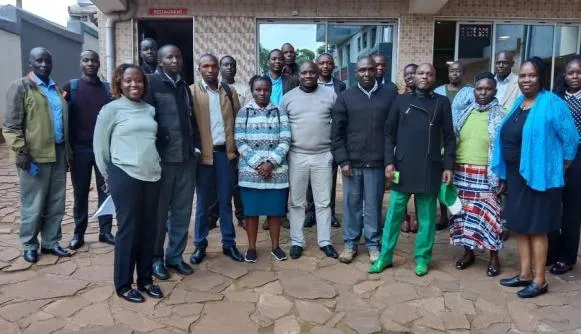
ICAT support in Kenya initially focused on strengthening the capacity to effectively and efficiently implement, monitor, and report adaptation actions and collect data for GHG inventories for the agriculture sector at national and county levels. Subsequent projects have targeted transparency for the crops sub-sector and nature-based solutions.
ICAT tools used in the country
Status
In Progress
Start date
2024-12-24
Overview
The project aims to develop a nature-based solutions monitoring and evaluation framework aligned with Kenya's climate-smart agriculture monitoring and evaluation framework . It seeks to identify and map relevant nature-based solutions practices in key biodiversity areas, create a national framework with clear metrics for measuring resilience, mitigation, and adaptation, build stakeholder capacity for data collection and reporting, and pilot the framework.
NDC tracking
Policy assessment
Sectoral climate data systems
- Identify and map agriculture relevant nature-based solutions practices for use in key biodiversity areas;
- Develop a national nature-based solutions monitoring and evaluation framework with clear metrics and tools for measuring/quantification of the processes/inputs and outcomes/benefits in terms of resilience, mitigation and adaptation, accounting for and using the ICAT Assessment Guides and ICAT case studies, Kenya’s national climate-smart agriculture strategy and the available draft nature-based solutions methodology;
- Build capacity of national and county-level stakeholders tasked with collecting and aggregating data for reporting on the NCCAP, NDC and BTR;
- Pilot the use of the guide in the counties and communities surrounding the Chyullu hills catchment area.
Status
Complete
Start date
2023-02-01
End date
2025-05-31
Overview
The main objective of this project is to build a sustainable crop subsector GHG activity data information system that will: facilitate information sharing among stakeholders, inform carbon emissions trend, agricultural development policy and decision making in Kenya, and track NDC implementation progress.
MRV frameworks
Policy assessment
- Evaluate the current MRV arrangements, performance, and specific needs for information by stakeholders and conduct policy assessment to establish mitigation impacts for the crop subsector.
- Develop an MRV reporting system for the crop subsector.
- Build capacity of stakeholders at national and sub-national level to GHG inventory for the crop sub-sector.
Status
Complete
Start date
2020-09-01
End date
2023-02-01
Overview
Strengthen the capacity to effectively and efficiently implement, monitor, and report adaptation actions for the agriculture sector in Kenya at national and county levels in a transparent manner.

- Operationalize an M&E tool for adaptation reporting for the agriculture sector
- Develop capacity building methodologies/approach for adaptation M&E
- Strengthen adaptation tracking, reporting and transparency at national and sub-national levels
- Stakeholder Mapping report
- Capacity Building Needs Assessment
- Driving Progress in Climate Action: The Critical Need for Transparency in Reporting within Kenya’s Agriculture Sector
- Climate-Smart Agriculture Monitoring and Evaluation Framework
- Training Guide: Climate-Smart Agriculture (CSA) Monitoring and Evaluation Framework and CSA Reporting Tool
- Training Report for the Climate-Smart Agriculture Reporting Tool Workshops
- Climate-Smart Agriculture Monitoring and Evaluation Framework and Reporting Tool: Module 1 – Transparency reporting requirements
- Climate-Smart Agriculture Monitoring and Evaluation Framework and Reporting Tool: Module 2 – Kenya CSA M&E Framework
- Climate-Smart Agriculture Monitoring and Evaluation Framework and Reporting Tool: Module 3 – CSA Reporting tool
Implemented with
If you want to find out more about the ICAT projects in Kenya, please contact the ICAT Secretariat